
The Man Who Helped Bring Football to Howell
George Jewett broke barriers at Michigan and Northwestern before helping start Howell High School’s first football team. This Friday, the trophy named in his honor is coming to Howell.
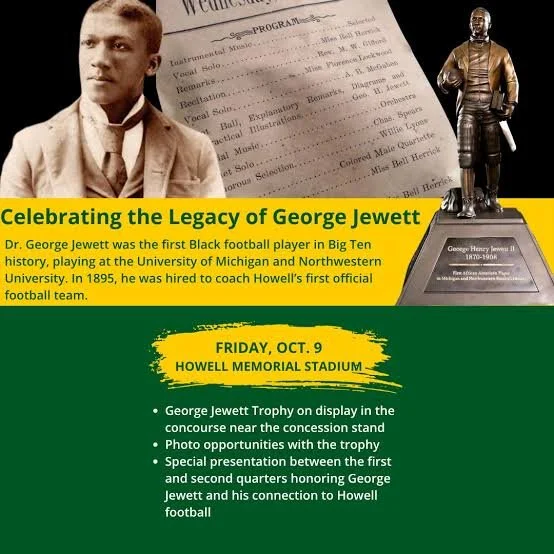
George Jewett’s legacy comes back to Howell on Friday, Oct. 9.
The trophy bearing his name will be displayed at the Howell Opera House, then at Howell Memorial Stadium before the Howell vs. Brighton football game. Image: Howell Public Schools.
I love learning about Howell history. Did you know that George Jewett helped start football right here in Howell?
In 1895, Howell High School put together its first official football team. George Jewett was its coach.
More than 130 years later, the football tradition he helped begin is still here. This Friday, the trophy that now carries his name is coming to Howell too.
Who was George Jewett?
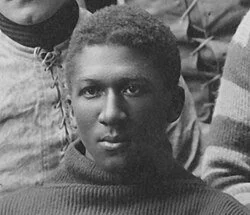
George Henry Jewett II in 1890
Jewett became the first Black football player at the University of Michigan and later the first at Northwestern. Photo: University of Michigan/Bentley Historical Library.
George Henry Jewett II was born in Ann Arbor in 1870. He was a remarkable student. He graduated as valedictorian of Ann Arbor High School in 1889. He was also a talented athlete who played football, baseball, plus ran track.
Jewett went on to the University of Michigan, where he studied medicine. He played football for Michigan in 1890 and 1892. He played fullback and halfback. He was also the team’s main kicker.
Jewett became the first Black football player at the University of Michigan. He was the first Black football player at any of the schools that would later make up the Big Ten Conference.
Later, Jewett went to Northwestern University to finish medical school. He played football there too, becoming Northwestern’s first Black football player.
You can learn more about his college football story through the University of Michigan’s history of George Jewett.
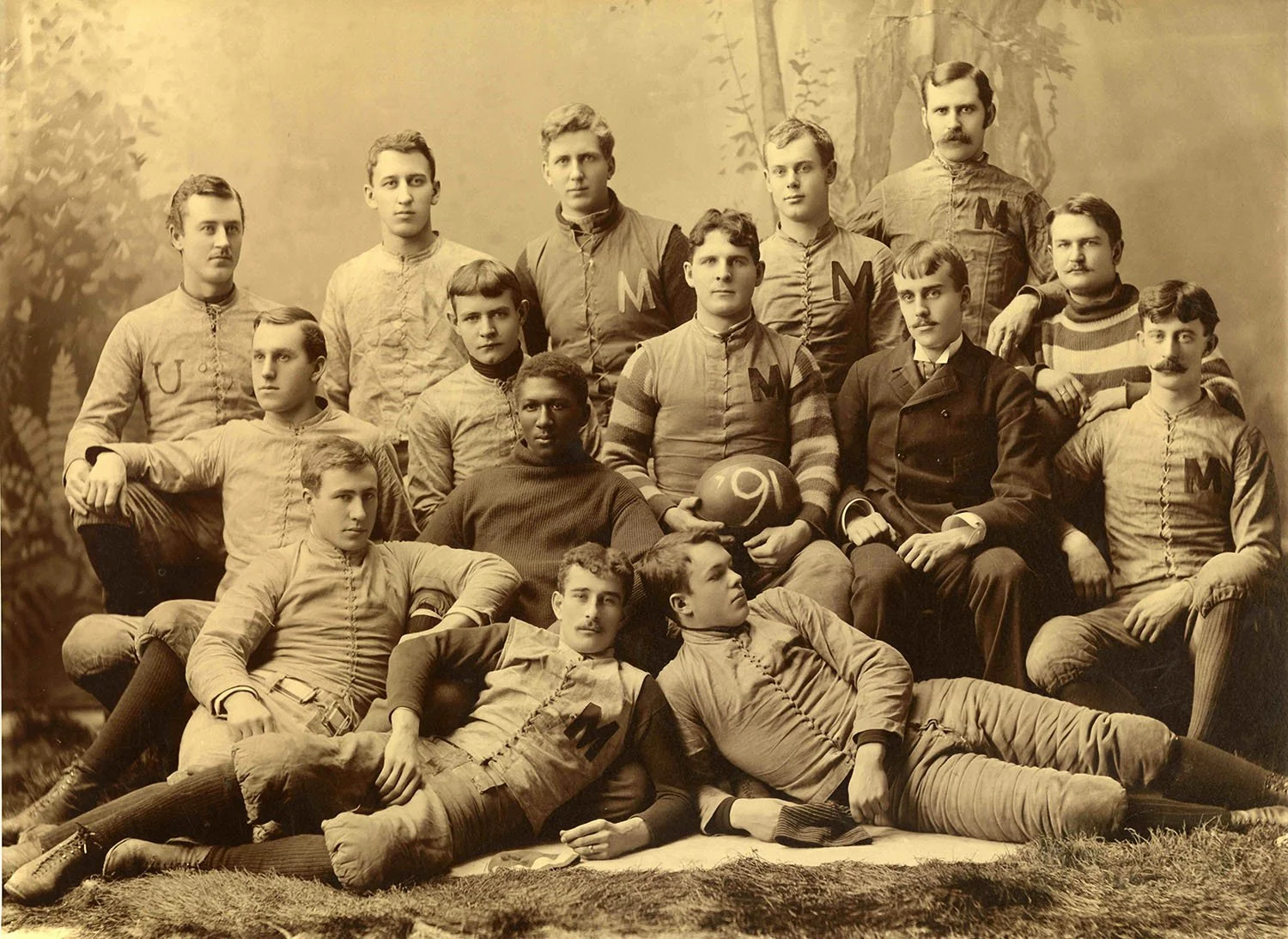
George Jewett, seated near the center in the dark sweater, with members of the University of Michigan football team in the early 1890s. Photo: University of Michigan/Bentley Historical Library.
Jewett broke a barrier at Michigan, but that did not mean the barrier stayed open.
After his final season in 1892, almost 40 years passed before another Black player joined Michigan’s varsity football team. That player was Willis Ward.
The University of Michigan’s Bentley Historical Library has written about this period in its article Black and Blue.
That history makes what Jewett accomplished even more impressive. His story did not end at Michigan or Northwestern. It came to Howell.
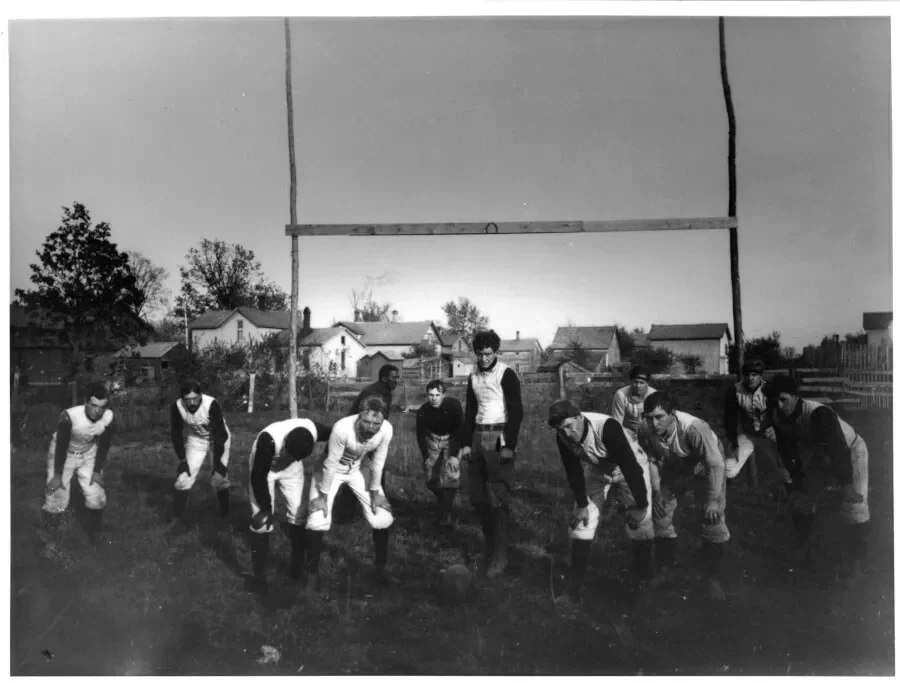
Howell High School’s first football team, photographed in early fall 1895 with Coach George Jewett, fifth from the left.
The team stood on a lot near what is now St. Joseph Catholic Church.
Photo: Howell Carnegie District Library Archives. View the original archive record.
George Jewett comes to Howell
In 1895, Jewett earned his medical degree.
That same year, he became the coach and manager of Howell High School’s first football team.
Before the Friday night lights, before generations of Howell players wore a football uniform, before all of the traditions we know today, George Jewett helped build the first team.
Local historical research has also identified Jewett as Michigan’s first Black high school football coach. He may have been one of the first in the country, though that is harder to prove.
The Livingston Post has a great story about Jewett’s connection to Howell if you want to dig deeper into the history.
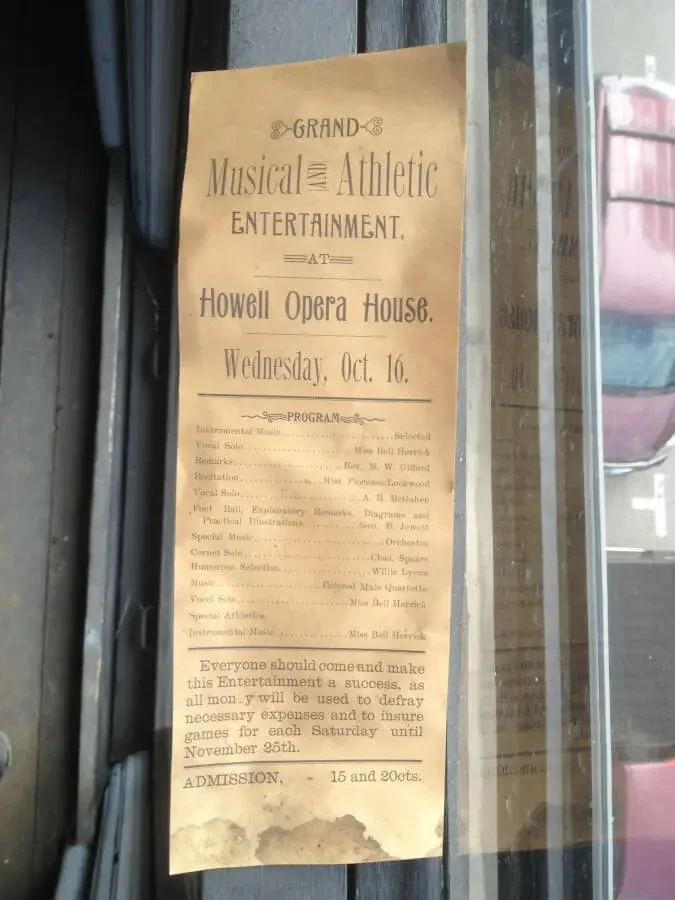
The 1895 program for a “Grand Musical and Athletic Entertainment” at the Howell Opera House.
The event helped raise money for Howell’s new football team.
Photo: Howell Opera House/Howell Area Archives, via The Livingston Post.
He helped teach Howell what football was
Football was still pretty new in 1895.
People were not growing up watching it on TV. They were not filling stadiums every weekend. Many people did not even know how the game worked.
George Jewett did more than coach the players.
He helped teach Howell about football.
An old program from the Howell Opera House advertised a “Musical and Athletic Entertainment.”
The event included music plus other entertainment. It also included a presentation from George Jewett.
His part of the program was listed as:
“Foot Ball, Explanatory Remarks, Diagrams and Practical Illustrations.”
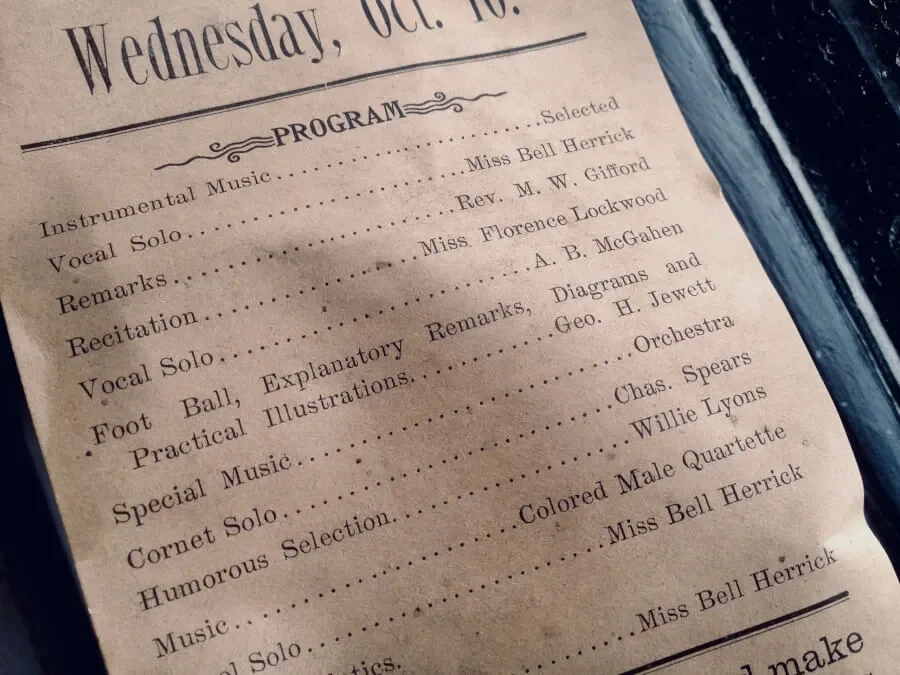
A closer look at the 1895 Opera House program.
George H. Jewett is listed for “Foot Ball, Explanatory Remarks, Diagrams and Practical Illustrations.”
Photo: Howell Opera House/Howell Area Archives, via The Livingston Post.
Basically, he stood in the Howell Opera House and explained football to the community.
Imagine sitting in the Opera House more than 130 years ago while someone explains this strange new game.
Now think about football in Howell today.
Howell’s first team finished that 1895 season with a 3-6 record, according to the local historical research shared by the Livingston Post.
A story that was nearly forgotten
One of my favorite parts of this story is how people started learning about it again.
An old 1895 program was discovered in the historic Howell Opera House. That find led to more research and piece by piece, George Jewett’s connection to Howell came back into view.
The George Jewett Trophy
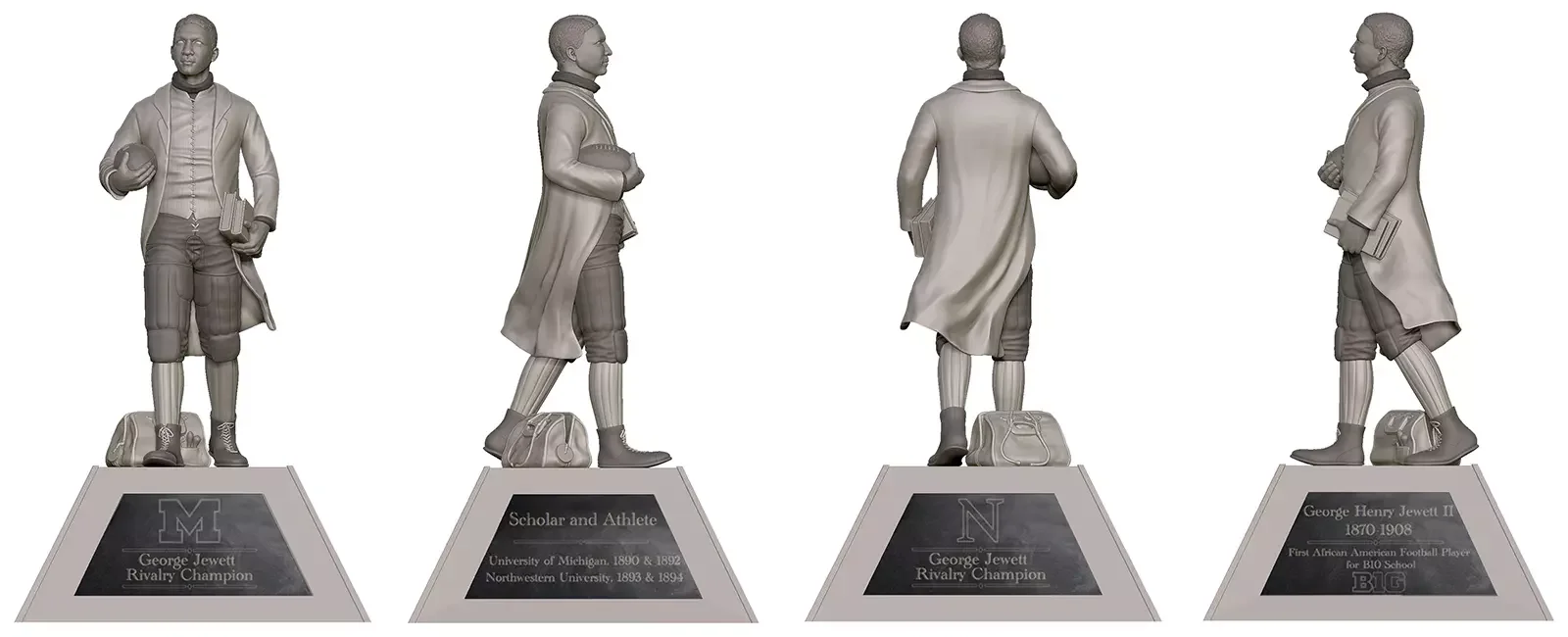
The George Jewett Trophy from several angles. The base honors his connections to Michigan and Northwestern, along with his life as a scholar and athlete. Rendering: University of Michigan Athletics.
In 2021, the University of Michigan and Northwestern University created the George Jewett Trophy.
The schools play for the trophy when their football teams meet. It became the first rivalry trophy in major college football’s Football Bowl Subdivision named for a Black player.
You can read about the creation of the trophy in the University of Michigan’s 2021 annual report.
The trophy itself tells more than a football story. It is a 36-inch bronze sculpture of Jewett.
He is shown in football gear from his time. The sculpture also includes pieces of his life as a doctor and scholar. There are books, a doctor’s coat, a medical bag, plus other details from his life.
Jewett should not only be remembered because he was the first Black player at Michigan. He was a scholar, a doctor, a coach. He spoke several languages. He later became a businessman.
There was so much more to his life than one “first.”
Now the trophy is coming to Howell
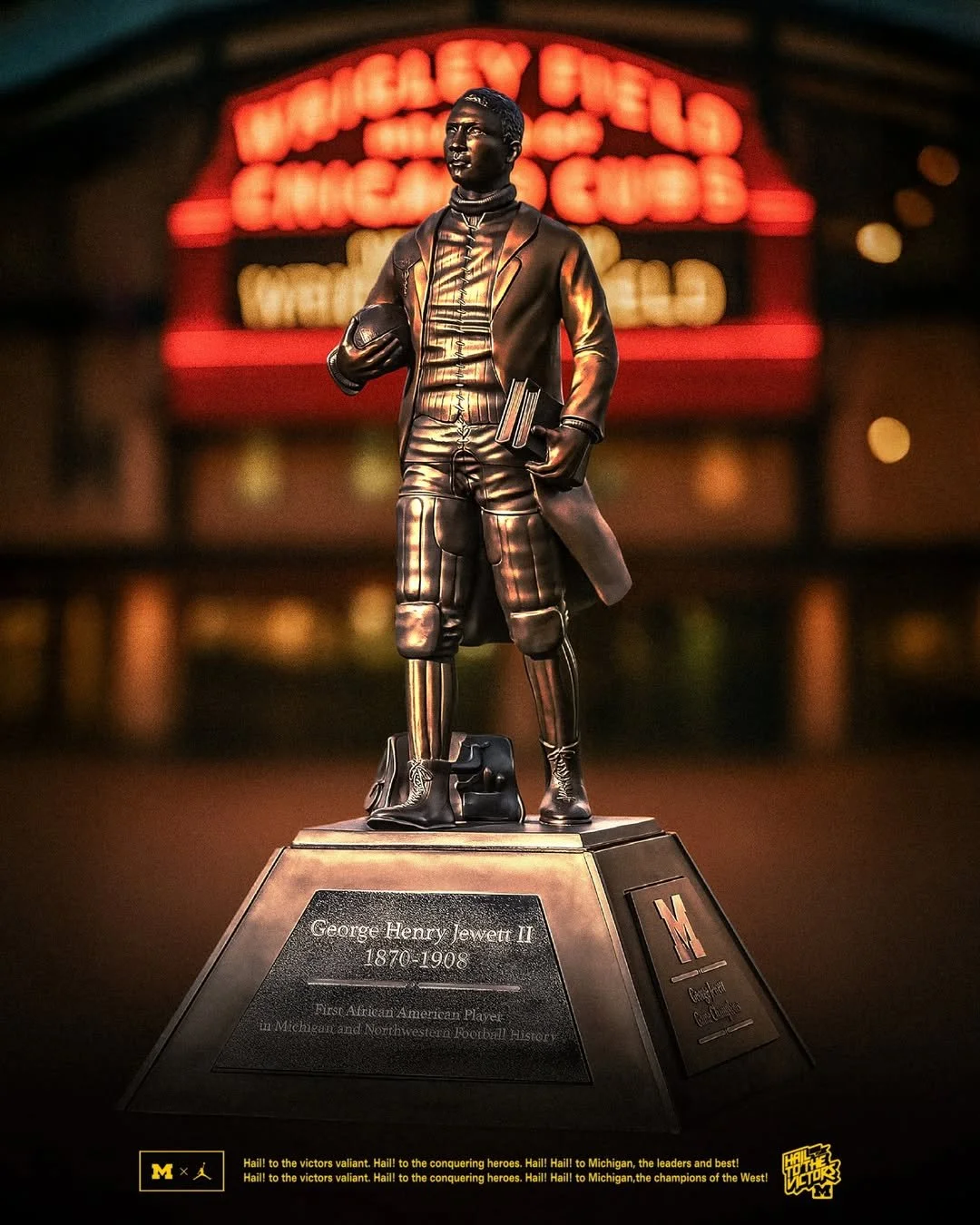
The George Jewett Trophy. The bronze sculpture includes details from Jewett’s life in football, medicine and education. Photo: University of Michigan Athletics.
This Friday, October 9, the George Jewett Trophy is coming to Howell.
The How Well We Live Foundation, Howell High School, and the Livingston Arts Council have partnered to bring the trophy here, with support from Jonna’s Market.
The first stop will be the Howell Opera House from 2 to 4 p.m.
In 1895, George Jewett stood inside the Howell Opera House and helped explain the game of football to our community.
Now, 131 years later, a trophy created to honor his life will come through those same doors.
Later that evening, the trophy will move to Howell Memorial Stadium for the Howell vs. Brighton football game. It will be on display on the concourse near the concession stand, where fans can stop to see it and take photos.
A special presentation honoring Jewett and his connection to Howell football will take place between the first and second quarters.
You can find the full details in the Livingston Post’s Oct. 9 event announcement.
I hope people come see it
You do not have to be a football fan to appreciate this story.
George Jewett was an athlete, scholar, doctor, coach, businessman, and barrier breaker. He made history at Michigan and Northwestern, but he also left a mark right here in Howell.
Before the Friday night lights, before generations of Howell students put on a football uniform, George Jewett helped get it started.
That is part of our history.
So I hope families come. I hope students come. I hope current and former players come. I hope people who love Howell history come. I even hope people who do not care much about football come.
Because this is about more than a trophy. It is a chance to remember someone whose story could easily have been lost and to recognize the role he played in the community we know today.
In 1895, George Jewett stood in the Howell Opera House teaching people about football.
This Friday, the trophy bearing his name comes back.
Come See the George Jewett Trophy
Friday, October 9
Howell Opera House
2 to 4 p.m.
Howell Memorial Stadium
Trophy display and photo opportunities on the concourse near the concession stand
Howell vs. Brighton kickoff: 7 p.m.
Special presentation: Between the first and second quarters
