
Learning Before Leading: Understanding the Digital World Our Kids Are Navigating
Keeping Kids Safe in a Changing Digital World
One of the things I committed to when I joined the Howell Public Schools Board of Education was continuing to learn. The issues that come before a school board can be incredibly varied. I want to understand as much as I can before I’m asked to make decisions or set policy.
That was part of the reason I attended a recent parent education session hosted by LACASA Center with Dr. Mandy Sanchez from Culture Reframed.
The presentation covered social media, pornography, gaming, online exploitation, body image, AI, deepfakes and the digital environment our kids are growing up in. Some of it was difficult to hear. Some of it made me think differently about conversations we have been having for years.
I went as both a parent and a school board trustee. Those roles aren’t the same, but in this case there was plenty for me to learn from both perspectives.
A little about Culture Reframed
I wasn’t very familiar with Culture Reframed before this event, so I spent some time learning more about the organization afterward.
Culture Reframed was founded by Dr. Gail Dines and focuses on protecting children and young people from what the organization describes as the harms of pornography and hypersexualized media. Its work uses a research-based public-health approach and includes parent education, professional training, research, youth programming and policy advocacy. In 2025, the organization reported delivering 57 presentations, trainings and keynotes and reaching people in at least 45 states and 34 countries.
They also produce FREE resources for parents and professionals on topics including AI-generated sexual content, youth mental health, sexting and talking with young people about pornography.
Culture Reframed has a particular point of view on these issues and advocates for policy changes related to its mission. I think that’s useful context when considering information from any organization. My attendance at the presentation wasn’t an endorsement of a particular policy approach. It was an opportunity to learn from people who spend a great deal of time studying these issues, look at the research they presented and think about what questions I should be asking.
You can read more about Culture Reframed and its work.
Kids aren’t necessarily looking for this content
The internet has changed so much from a place where we search for things to a place where content is continually being selected and delivered to us.
Kids don’t always have to go looking for inappropriate content to encounter it.
It can appear in a social media feed, be recommended by an algorithm, show up while gaming, or be sent by another person. Dr. Sanchez talked about the importance of recognizing that exposure doesn’t necessarily mean a young person intentionally sought something out.
That changes some of the conversations adults need to have with kids. “Don’t go to this website” doesn’t fully address a world where content can come to them.
It also made me think about this from a school governance perspective. When we’re talking about student technology use, digital citizenship or safety, we have to be talking about the digital environment students actually live in—not the Internet we remember from 10 or 20 years ago.
And now there is AI
The conversation about AI and deepfakes added another layer.
We’ve spent years telling young people to be careful about the pictures they take and share. They still need to understand that. But technology now makes it possible to manipulate an ordinary photograph into a sexualized image without the person in the photograph ever creating or sharing an intimate image.
Dr. Sanchez discussed both sides of that conversation: young people need to understand the harm involved in creating or sharing that kind of image of someone else, and they need to know that if someone does it to them, they should tell a trusted adult and get help.
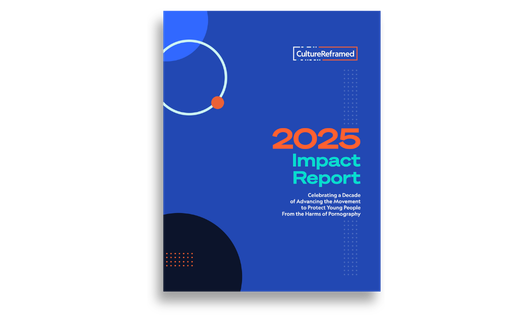
2025 Impact Report
Culture Reframed’s 2025 Impact Report also describes its work related to AI-generated sexual content, including a white paper on the subject and research conducted with MIT researchers using machine learning to examine child-like imagery on heavily trafficked pornography websites.
This is one of the challenges of making policy around technology. Technology moves very quickly. Policy usually doesn’t.
It doesn’t mean we need a new policy every time a new technology appears. It does mean we should periodically look at existing policies and ask whether they still address the situations students are actually encountering.
Will they tell us?
For all the technology we discussed last night, one of the simplest ideas was also one of the most important to me.
When something goes wrong online, will a child tell an adult?
Dr. Sanchez talked about kids being afraid to tell parents about something they’ve encountered because they’re worried they’ll get in trouble, lose their phone or disappoint someone. If that fear keeps a child from asking for help, they may try to deal with a serious situation by themselves.
As a parent, that made me think about the conversations I have at home.
As a trustee, it made me think more broadly about the adults and systems surrounding students. Do students know where to go when something happens? Do they believe an adult will listen? Do families know where to turn for help?
Those aren’t questions a school board answers by itself, and many of the day-to-day answers appropriately belong with educators and administrators. But student safety, district policy and family engagement absolutely belong in the conversations a board has.
Howell Public Schools already identifies Engaging, Positive and Safe Learning Environments and Dynamic Family & Community Engagement among its strategic focus areas.
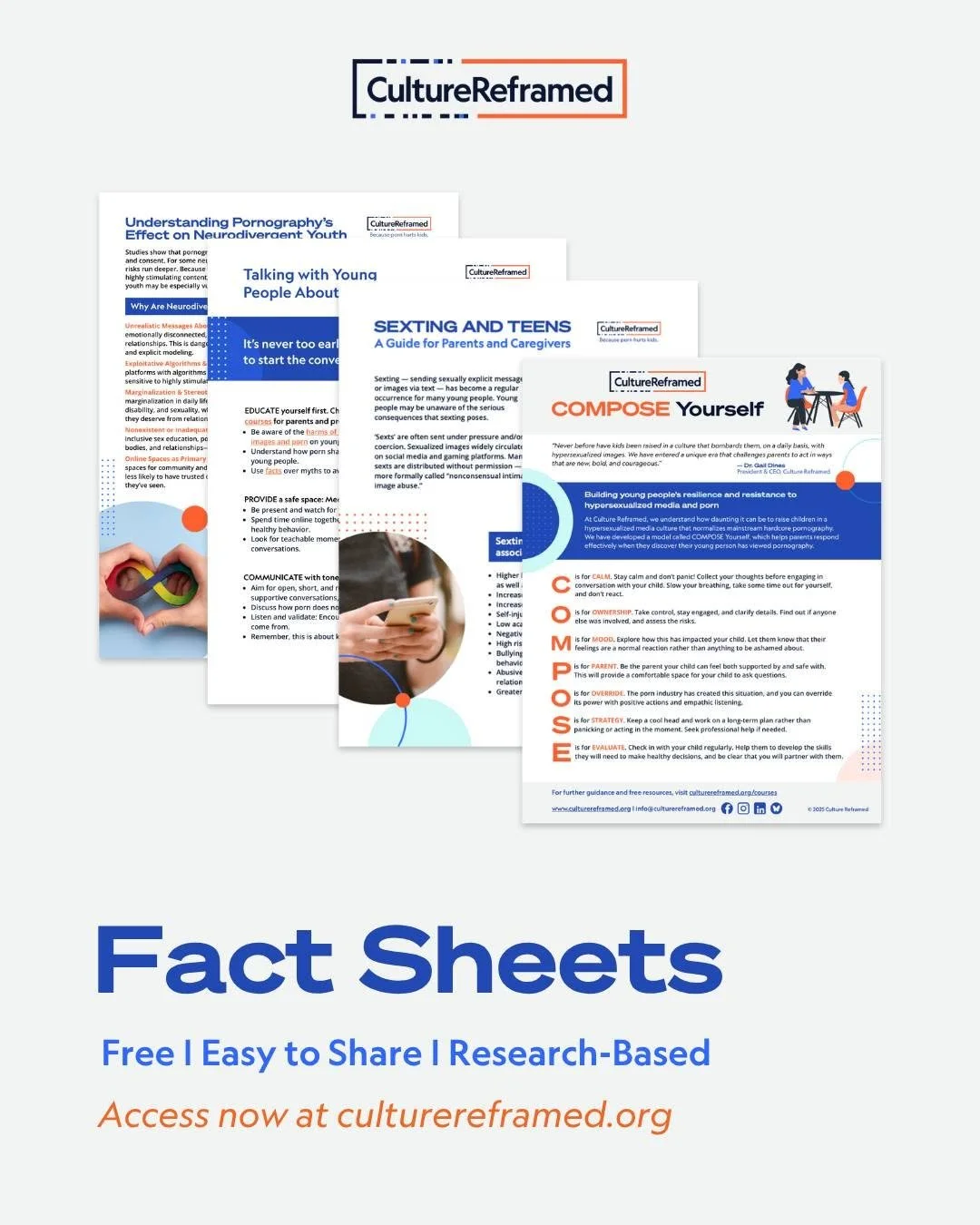
A Practical Resource for Families
One resource I wanted to share is Culture Reframed’s Family Technology & Social Media Contract. It gives families a starting point for conversations about devices, social media, privacy, digital citizenship, online safety and what to do when something goes wrong.
I especially like that it’s built around communication rather than just rules. Parents and caregivers make commitments, too, including staying calm and supportive when a child comes to them with a problem.
Resources to explore

Culture Reframed Parent Programs
Free parent education programs, including separate programs for parents of tweens and teens.
Family Tech Guide
Information families can use to think through technology expectations and start conversations at home.
Family Tech Agreement
This was one of my favorite practical resources from the evening. Rather than simply giving kids a list of rules, it helps families talk through apps, privacy, screen time, online friends, posting, parental supervision, tech-free time and what happens when something goes wrong.
I liked the recommendation to approach the agreement from the perspective of safety rather than simply trust. The guide recognizes that kids will make mistakes and encourages parents to make sure their children know they can still come to them for help.
For anyone who wants to look more closely at the research rather than only the parent materials, Culture Reframed also has a collection of research and educational resources available through its website.
Culture Reframed Research & Resources
I would also encourage families to look beyond any single organization. The American Academy of Pediatrics Center of Excellence on Social Media and Youth Mental Health is another good place to explore research and guidance about children and digital media.
Learning Before Leading
When technology, AI, student safety or digital citizenship comes before the Board, I want to be prepared to ask informed questions. Are our policies keeping pace? What are our students actually experiencing? What does the research and data tell us? What are our educators seeing? What are parents seeing?
I also want to be thoughtful about roles. What belongs in Board policy? What belongs with the superintendent and staff? What decisions belong with parents and families? And where can the district provide information and resources while respecting the important role parents have in making choices for their children?
For the things that are the district’s responsibility, how will we know whether what we’re doing is working?
I won’t always know enough about an issue when it first comes before me, and I think part of being a responsible trustee is being willing to learn.
The Board isn’t there to manage the district day to day. We establish policy and direction collectively and monitor the district’s progress. To do that well, we need to understand the issues we’re being asked to govern.
Sometimes that means reading a board packet, listening to parents, students or staff, looking at data, asking more questions, or spending an evening learning about a subject that isn’t particularly comfortable to talk about.
I’d rather learn about the difficult things our kids are navigating than pretend they aren’t happening.
